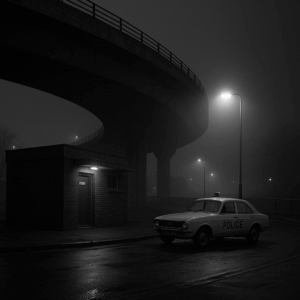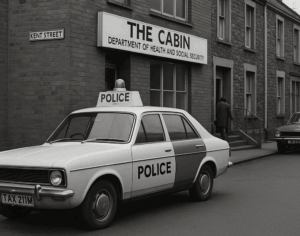
It was my first winter in uniform, and I was still getting used to the idea that people would call 999 and I’d be the one expected to sort it out.
It was Tuesday, 3rd January 1978. I was on a 06:00–14:00 shift. At the 05:45 briefing, I was allocated foot patrol in East Street, Bedminster.
It was the kind of cold, grey day that soaks into your bones. I was dropped off in West Street by PC Gosling, who was on mobile patrol in B1.
From West Street, I slowly walked toward East Street, saying good morning to those heading to work or standing at bus stops. All the while I was checking the windscreens of parked cars to make sure their tax discs were up-to-date.
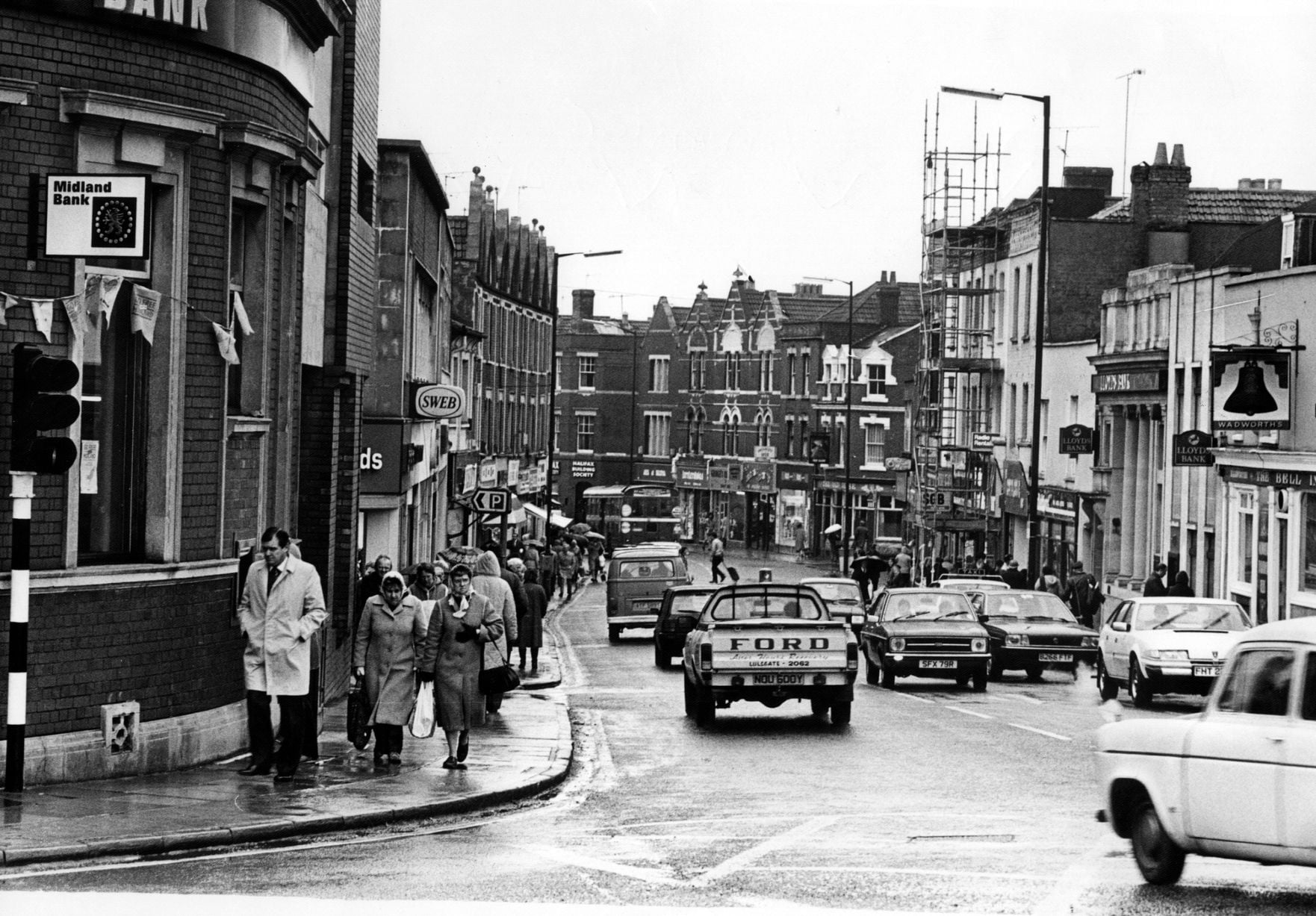
East Street in Bedminster is the main shopping area of South Bristol. It also includes West Street and North Street. The area has lots of shops and pubs.
The morning went slowly. I was picked up for refreshments back at Bishopsworth at 9 a.m., where I had the compulsory game of blob—the winner collected a penny a blob from the others.
I was dropped back in Bedminster after 10 a.m. My polished Dr Martens with bulled toe caps were thumping the pavement when the radio crackled:
“489 from Control, attend Tesco Furnishings, East Street, theft reported.”
I acknowledged the call, and I remember my heart speeding up. Suddenly it felt official.
I got to the store at 11:45 a.m. The place smelled of cheap upholstery and floor polish. I was shown into the manager’s office, where Mr John Smith, a Tesco employee, was waiting with a schoolboy standing sullenly beside him.
“Officer,” Smith said, sounding angry but embarrassed at the same time. “This lad here’s pinched my wallet.”
Gary Bush was fifteen, skinny, hair too long for school regs, staring at the floor like it was the most interesting thing in Bristol.
Smith explained he’d found Bush in the staff tearoom, told him to clear off, then discovered his wallet missing from his jacket on a chair. He’d stopped him, brought him here, and called us.
I tried to sound like I’d done this a hundred times:
“Is this true?”
Bush just mumbled, not looking at me:
“No. I haven’t seen no wallet.”
I remember feeling out of my depth already. The manager’s office was a clutter of files and old newspapers. I did a quick search. There it was—between two sheets of paper under a chair, like someone thought that made it invisible.
I looked at Bush. He avoided my eyes.
Smith was firm, saying he never went into the office unless invited by the manager, and he hadn’t been in there that day.
At 1:15 p.m., I told Bush he was under arrest. I gave the caution, trying to remember the words exactly. He replied:
“I didn’t take no wallet.”
He sounded angry now, defiant.
I called for transport. PC Gosling rolled up in XB1—a relief to see another uniform. We took Bush to Bishopsworth Police Station. He was booked in by the custody sergeant and placed in the juvenile cell—a small room with a wooden shelf for a mattress, no toilet, and a heavy metal door with a covered spyhole.
Later, I interviewed him under caution. I tried to be thorough, even though my hand was shaking slightly when I started writing the notes:
“Why did you go into Tesco’s?”
“To look at the tellies.”“Why did you go into the tearoom?”
“I didn’t go all the way in. I just looked around the corner.”“Did you take the wallet from the coat?”
“I haven’t seen any wallet.”“How did it get to the manager’s office?”
“I don’t know. I never had it.”“Why was it found under the chair next to where you were standing?”
“I didn’t put it there. I was sitting for most of the time.”“But you were standing by the cabinet.”
“Yes, but somebody was with me.”“Were they watching you all the time?”
“I don’t know. I can’t remember.”“How did the wallet change offices?”
“I don’t know.”“How did the wallet get between two sheets of paper?”
“I don’t know.”
He denied everything, of course. It was frustrating. I remember thinking: How can I prove intent?
We finished around 2 p.m. His dad came to collect him not long after. I finished my 6–2 shift with 50 minutes overtime, which I was quietly pleased about—it meant I’d get paid for the paperwork.
It wasn’t glamorous. It wasn’t dramatic. But it was my first arrest.
Looking back, it taught me that policing wasn’t about glory—it was about turning up, asking questions, and doing things properly, even when it was just a stolen wallet.