Monday 13th February 1978
It was the start of a long stretch of nights — seven straight shifts, 10 p.m. to 6 a.m. But in truth, the working day started before that. By 9:45 p.m., we were expected to be parading for duty at Bishopsworth Police Station. No exceptions.
Back then, I was the sprog — the newest on the shift — which meant one thing: I made the tea.
Fifteen constables, two sergeants, one inspector. All men, save for a single policewoman — and no talk of political correctness in those days. I’d arrive early, fill the huge metal teapot, lay out clean mugs, and place the tray dead centre on the black plastic-coated metal tables in the parade room.
As the others filtered in, the air thickened with cigarette smoke — nearly everyone lit up back then. By the time the sergeant began briefing, the haze above our heads was almost theatrical.
He ran through stolen vehicles, wanted persons, local complaints — the bread and butter of night patrol. But one detail stood out that evening. There had been a report of suspicious activity in the public toilets under the Cumberland Basin flyover in Ashton. Anonymous sexual encounters between men — known in the day as cottaging — were said to be taking place there. It was an offence under the old Criminal Law Amendment Act of 1885, the same one famously used against Oscar Wilde.
And so, for the week, PC Andy Hunt and I were assigned to plain clothes duties. Our brief: keep a close eye on the Cumberland Basin toilets and the surrounding area of Bedminster and Ashton.
After briefing, I changed back into what I’d arrived in: jeans, a jumper, and a well-worn leather jacket. Andy and I climbed into a brown Austin Allegro — a CID car borrowed for the week — and headed out into the cold Bristol night.
A False Alarm in Windmill Hill
At 10:55 p.m., just as we were heading for our first check at the Basin, we were diverted. A call had come in — a male had been seen tampering with a lorry in the NCP car park at Windmill Hill.
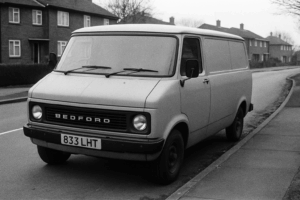
When we arrived, the car park was deserted except for a Bedford TL lorry. I approached the driver’s side and saw a white male slumped against the window, apparently asleep.
I tapped the glass and identified myself, showing my warrant card. The man woke with a start and explained he was preparing for an overnight journey to Wales. He’d checked the lorry earlier and was simply waiting for his mate to arrive before setting off.
Everything appeared in order. No offences. We moved on.
The Toilets Beneath the Flyover
Next stop: the Cumberland Basin toilets.
If you visit today, you’ll find a waterside restaurant popular with families and tourists strolling along the regenerated harbourside. But in 1978, it was a very different story.
Back then, under the cold, echoing flyover, the toilets sat squat and forgotten — an afterthought in concrete. That night there were no cars parked nearby, so we entered through the male entrance.
The inside was dimly lit. We needed torches to properly see. The smell hit first — stale urine, mildew, and neglect. The urinal was a porcelain trough, deeply stained, long past any recent cleaning.
There were three cubicles, made of old melamine partitions. I pushed the first door inward and swept the torch beam around.
A hole had been cut into the adjoining cubicle wall — crude and deliberate. The second cubicle had holes on both sides. And everywhere, graffiti: first names, phone numbers, crude invitations, and obscene suggestions — all scrawled in permanent ink.
It was clear the reports had weight. The evidence was all around us. But on that night — and on every night we checked that week — the place was empty.
Before leaving, we checked the ladies’ toilets. No graffiti. No holes. Nothing out of the ordinary.
Conclusion
That week, we made several passes through the area. Quiet every time. Maybe the community complaint had spooked regular visitors. Or maybe it had been exaggerated in the first place. Either way, we recorded our checks and moved on to the next call, the next shadowed street, the next shift beneath the cigarette smoke and fluorescent buzz.
Not every night on the job was dramatic. But every one carried its own story. This was just one.