Sunday 19th February 1978
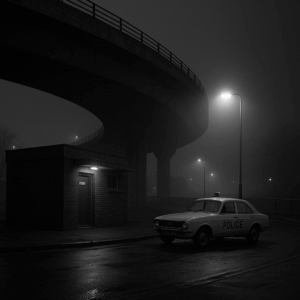
The final night of a long, cold week of night shifts. Seven nights straight of plain clothes patrol, watching and waiting in the shadows. The Cumberland Basin toilets — once again, quiet. The bitter cold and damp likely kept even the most determined visitors at bay. We’d checked them every night that week. Every visit, negative.
In the early hours of Sunday morning, the Inspector grounded all police vehicles — heavy snowfall had left the roads treacherous, and it simply wasn’t worth the risk. By the time Sunday evening came around, the snow had melted into a grim slush.
Still, the job went on.
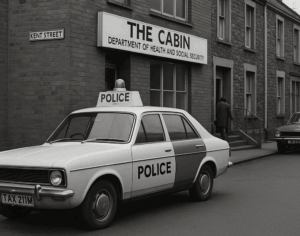
That evening, just like the six before, I was partnered with PC2234 Andy Hunt. We were assigned to plain clothes duties in the Bedminster and Ashton areas, and we left Bishopsworth Police Station once again in CID’s brown Austin Allegro. Andy was driving — although I held a full licence, I hadn’t yet been authorised to drive police vehicles.
Our first visit of the night took us back to the Cumberland Basin. Cold, wet, and deserted. Another quiet check.
We moved on, cruising through the streets until we turned into Sheene Road Car Park. It was late. The kind of hour where silence echoes. The car park was still blanketed in snow around the edges, while the main surfaces were churned to slush by the day’s traffic. A few cars lingered, half-buried under melting snow.
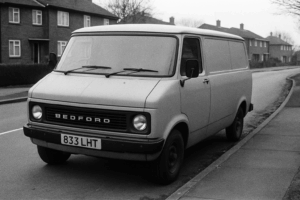
As we turned in, our headlights caught a parked lorry. Written on the side in large lettering: Reed & Sons.
And then something moved.
A shadow — low, quick — slipped beneath the lorry. Andy brought the car to a stop. I stepped out and approached the vehicle, my heart rate climbing the way it always did when something didn’t feel quite right.
Beneath the lorry, a man lay on his back.
“What are you doing under there?” I asked.
Startled, he looked up. “You scared me,” he said.
I helped him up and identified myself, showing my warrant card. He gave his name as Roderick Paisley, 22 years old, a mechanic, living in Bayswater Avenue, Westbury Park — a good five miles from where we stood.
He told me the nearby Triumph Herald, registration 676 PTA, was his car. A woman — his common-law wife — was inside, waiting.
I asked him again: “What were you doing under that lorry?”
His answer was immediate. “I’ll tell you the truth. I had an argument with the girl, stalled the car, battery was flat and wouldn’t restart. I went over to the lorry to get the battery so I could jump it with my car. I was going to put it back.”
I arrested him on suspicion of theft and cautioned him. His response was quiet: “Yes, alright.”
Back at Bishopsworth
We conveyed Paisley back to Bishopsworth Police Station, taking him up the rear steps, through the double doors, and into custody. In 1978, there were no custody suites as we know them today. Just two cells and a custody sergeant — who also acted as the station officer — sat behind a metal desk. No screens. No barriers. Just a suspect and an officer, eye to eye.
Paisley was booked in, searched, and his belongings were recorded and sealed. He was placed in one of the two cells while I prepared for the interview.
At 12:45 a.m., I took him to the small interview room just off the custody area. No recording equipment. Everything was taken down by hand — contemporaneous notes in my police pocket notebook.
The Interview
Q: “Why were you in the car park?”
A: “I had an argument with Leslie. I wanted to sort it out before going to my friend’s house.”
Q: “Where does your friend live?”
A: “Off North Street somewhere. I don’t know the road name, but I could take you there.”
Q: “Why were you going to his house?”
A: “I haven’t got an alarm clock. I start a new job tomorrow, so I was staying there so I wouldn’t be late.”
Q: “What’s your friend’s name?”
A: “Amora… but I don’t know her surname.”
Q: “You know her well enough to stay the night, but not her surname?”
A: “It’s more of Leslie’s friend.”
Q: “What did you want the battery for?”
A: “Car trouble. Battery was flat. I couldn’t start it.”
Q: “You were on a slope. Why not bump start it?”
A: “It was snowing.”
Q: “Could’ve pushed it.”
A: “That’s what we tried. But someone Leslie’s size…”
Q: “So you decided to take a battery?”
A: “I was going to put it back.”
Q: “You expect me to believe you’d crawl back under that lorry in the snow to reconnect it?”
A: “Believe what you like. That’s what I was going to do.”
I ended the interview there. Completed his antecedent form, took fingerprints, and returned him to the cell. The daytime CID would deal with the charge and court appearance.
The Shift Ends
At 06:00, my shift — and the entire week of nights — came to an end. I went home exhausted, but satisfied. The snow was melting. So was the week. I had two days off before returning for a Wednesday 2–10 shift.
Sometimes the biggest stories happen in the smallest moments — a shadow under a lorry, a lie that almost sounded true, a man with excuses in the snow.